
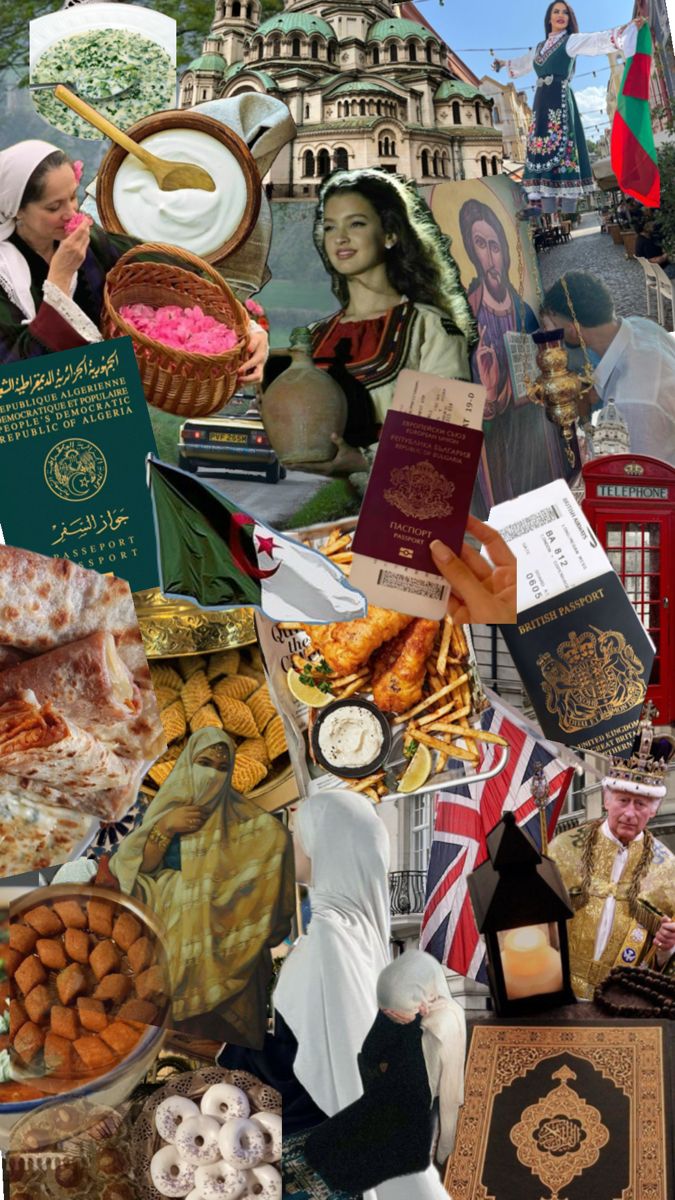
Navigating multiple ethnic backgrounds, nationality, religion and the inability to tick one box to describe your identity. Screw fitting in I say.
Let’s start with a little back story to help you (and I guess, myself, navigate this “crisis”). Have you ever been asked the question, “Where are you from?” growing up and took 3-5 business days to answer, because same. Well, here’s the answer broken down, I was born and raised in London, and all my childhood being quintessentially British. My mother is Bulgarian (Eastern European), who grew up Christian but became Muslim in her 20s, so if you can tell, her side of the family is still Christian. My great-grandparents (my grandma’s parents on my mum’s side) were Greek-Macedonians but fled the war and became Bulgarian. Now onto my father, he is Algerian and Muslim. (pretty simple). Now that you have a picture of my background, I am half Algerian, half Bulgarian, with white skin and a Muslim.
None of this is a problem to me, of course, I love where I’m from, how I look, and the religion I’ve chosen, but yet for most people, I was like a puzzle they couldn’t figure out. I don’t just speak for myself when I say the words, “Well I’m too (insert race/ethnicity/skin colour/religion) for (those people), but also I’m too (insert race/ethnicity/skin colour/religion) for (those people).” Those “types of people” usually come from a place of ignorance, like all racists, Islamaphobes, etc.
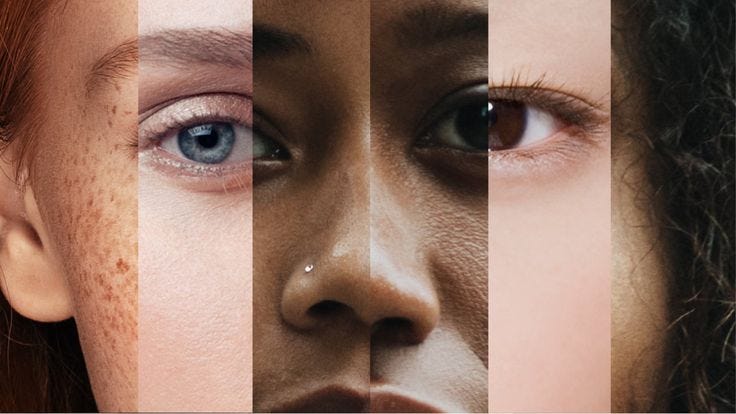
Before I wore my headscarf (hijab, clearly identifying me as a Muslim), to any stranger I looked like a white British girl, so to North Africans and some Muslims I didn’t quite “fit in”.. sometimes people wouldn’t return my “salaams” (Islamic greeting: peace be upon you), or I’d get asked, “How are you white? Or Muslim?” You get the idea.
Which now sounds crazy, but growing up, it can make you feel isolated from your own identity when you’re young and looking to connect with people who can “understand” you. Speaking to a lot of mixed-race women or other women of colour who are first/second-generation immigrants made me realise that this is more common than not. This may or may not be the reason I’ve hated how certain people divide themselves into cliques based on race and ethnicity because it’s so outdated and stereotypical to expect people to love only “their own” or fit into one box on an ethnicity survey.
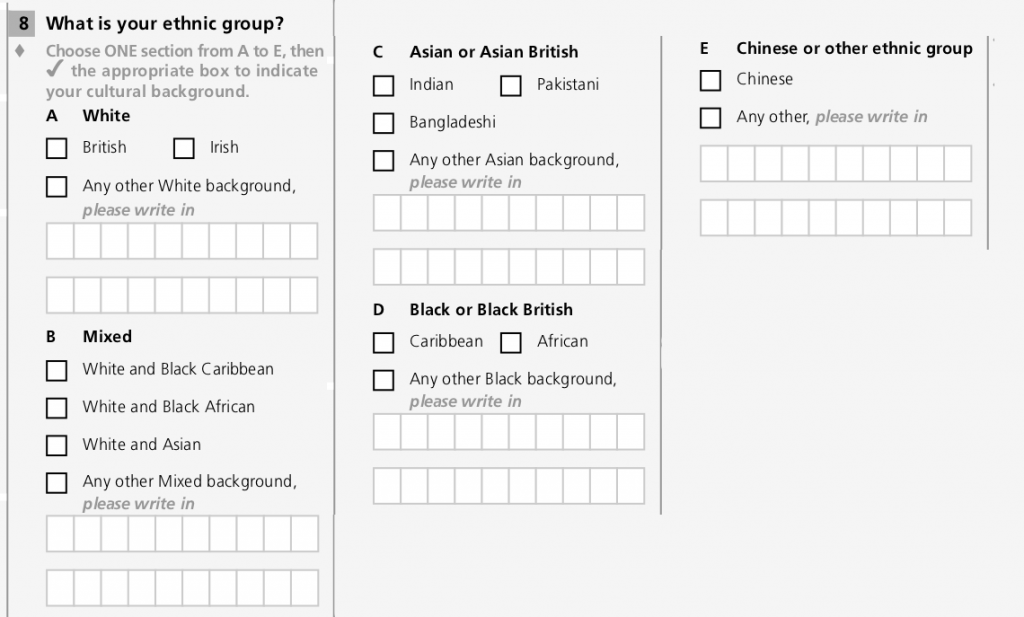
So how do you get out of this web where people are pulling you from everywhere? Its simple really, you realise you are all of those things, your identity isn’t what defines you, but its all yours to embrace. Realise how lucky you are to call all those cultures, traditions, family, beliefs yours. Something my dad says that I think really resonates with this is “do these people pay your rent, do they put food on your table, look after you when you are going through hard times, no. that’s all YOU.” So be the one who choose what you will accept and tolerate from people and protect your identity because it’s yours and yours alone.
Skipping forward to the present, I do wear the Hijab, not to fit in but because I realised I was putting it off for that exact stupid reason, because not wearing, helped me fit in. I realised I don’t want to fit in if it meant sacrificing a part of my identity close to my heart, an identity I chose. And now I know I can be a white Muslim, a Bulgarian Muslim, etc and that people will always have something negative to say regardless because I’m not one dimensional.
My favourite story growing up was from my mum about “The Donkey and The Man”, because the lesson it teaches is invaluable.
The story of “The Donkey and the Man” is a classic parable that reflects human nature’s tendency to be dissatisfied and overly concerned with others’ opinions. While variations of this tale exist, the essence remains the same:
The Donkey and the Man
Once upon a time, a man and his young son were walking to market with their donkey. Along the way, they encountered different groups of people who shared their opinions about how they were traveling.
- The First Encounter:
- As they walked alongside the donkey, a group of villagers passed by and laughed.
- “What fools!” they said. “You have a donkey, yet neither of you is riding it. What’s the point?”
- Embarrassed, the man decided to ride the donkey while his son walked alongside.
- The Second Encounter:
- A little further down the road, another group of people criticized him.
- “What a selfish father!” they exclaimed. “He rides while his poor little boy has to walk.”
- Feeling ashamed, the man got off the donkey and put his son on instead.
- The Third Encounter:
- They hadn’t gone far before they heard more criticism.
- “What a disrespectful child!” people said. “He rides comfortably while his old father walks.”
- Trying to please everyone, the man climbed onto the donkey with his son, and they both rode together.
- The Fourth Encounter:
- Just as they thought they had resolved the issue, another group of onlookers gasped.
- “How cruel!” they cried. “Two people on one poor donkey. How heartless can you be?”
- The man and his son, desperate to avoid further judgment, decided to carry the donkey themselves.
- The Final Outcome:
- As they struggled to carry the donkey across a bridge, the weight became too much. They slipped, and the donkey fell into the river and drowned.
- The father and son were left with nothing but regret.
The tale concludes with this lesson:
“You can’t please everyone. Trying to satisfy everyone’s opinions will only lead to your downfall.” This story is a reminder of the futility of chasing external validation and the importance of being true to oneself.
So to find true peace, be who you are and who you want to be, and screw trying to fit in!
 Looking in the Mirror
Leave a comment